Practical home organization tips for Santa Clarita and San Fernando Valley families who need systems that fit real life.
If you’re busy juggling work, kid’s activities, meal prep, or just everything else life throws at you, the last thing you need is a complicated organizing system that requires expensive bins and hours of free time you don’t have.
The truth: Organization doesn’t have to be hard or expensive. It’s simply a system you put in place to help your everyday life run better. When all your items have a dedicated home, mornings are easier, meal prep is faster, and you spend less time searching for lost items.
We’ve all seen the perfectly styled pantries on Instagram and the celebrity-organized closets on Netflix. And while I love a good organizing show as much as anyone (my favorites listed below!), those systems aren’t always realistic for families living in real homes with real budgets.
Instead of following complicated methods, I want to share three simple organization rules you can use right now — no matter your budget, home size, or home much “stuff” you think you have.
The 3 simple organization rules for real life
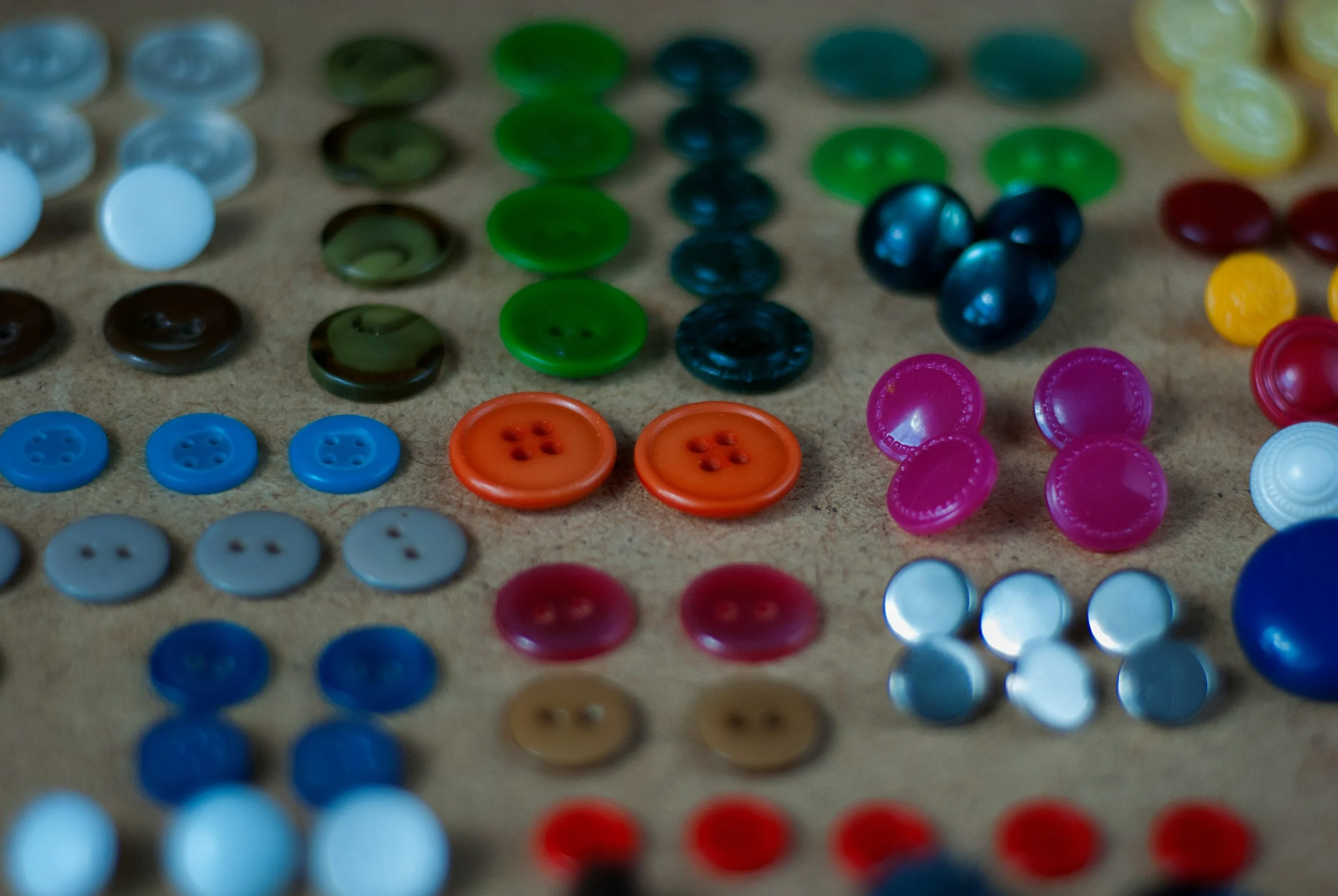
Group Like Items
Appropriate Location
Any Container
Let me break down exactly how each rule works and how you can apply it today.
Rule 1: Group like items together
Why this matters: You can't organize what you don't know you have.
I've walked into countless Santa Clarita homes where families have the same items scattered across multiple locations. Water bottle lids in three different kitchen drawers. School supplies and craft supplies all jumbled together. Socks in the dresser, the closet, the ottoman, the nightstand… and the list goes on.
Here's what happens when like items aren't grouped together:
You waste time searching multiple spots
You buy duplicates because you can't find what you already own
You end up storing way more than you actually need
Everything feels chaotic because nothing has one clear home
How to apply this rule:
Start with one category or item at a time. Let's use water bottle lids as an example:
Walk through your kitchen and collect EVERY lid you can find
Match lids to bottles (you'll probably find some orphans!)
Remove the items you no longer need (items you don’t use, extra pieces, etc.)
Donate or toss
Real-life example: One client thought she needed more food storage containers. When we grouped everything from multiple cupboards, we found 22 containers with an excess of 45 lids! We decluttered the mismatches and suddenly she had more room in her cabinet and she wasn’t fighting a leaning tower of lids each time the door opened.
Rule 2: Store items in their appropriate location
Why this matters: Organization only works if it fits how you actually live.
Now that you've grouped your items, they need a dedicated home. But not just any home—the RIGHT home based on where and how you use them.
Ask yourself these questions:
Where do I use this item most often?
What's the first place I look for this when I need it?
Who in the family uses this, and can they easily reach it?
How to apply this rule:
Think about your family's actual routines, not some Instagram-perfect ideal.
Place items you need to grab on your way out of the house in your entry way, mudroom, garage, etc.
Running around to brew coffee in the morning? Mugs in the cupboard over the coffee maker, basket to hold the filters and accompaniments nearby and you have a new coffee station!
Don't be afraid to experiment! I often rearrange things in my own home when I notice something could work better. Organization isn't set in stone—it should evolve as your family's needs change.
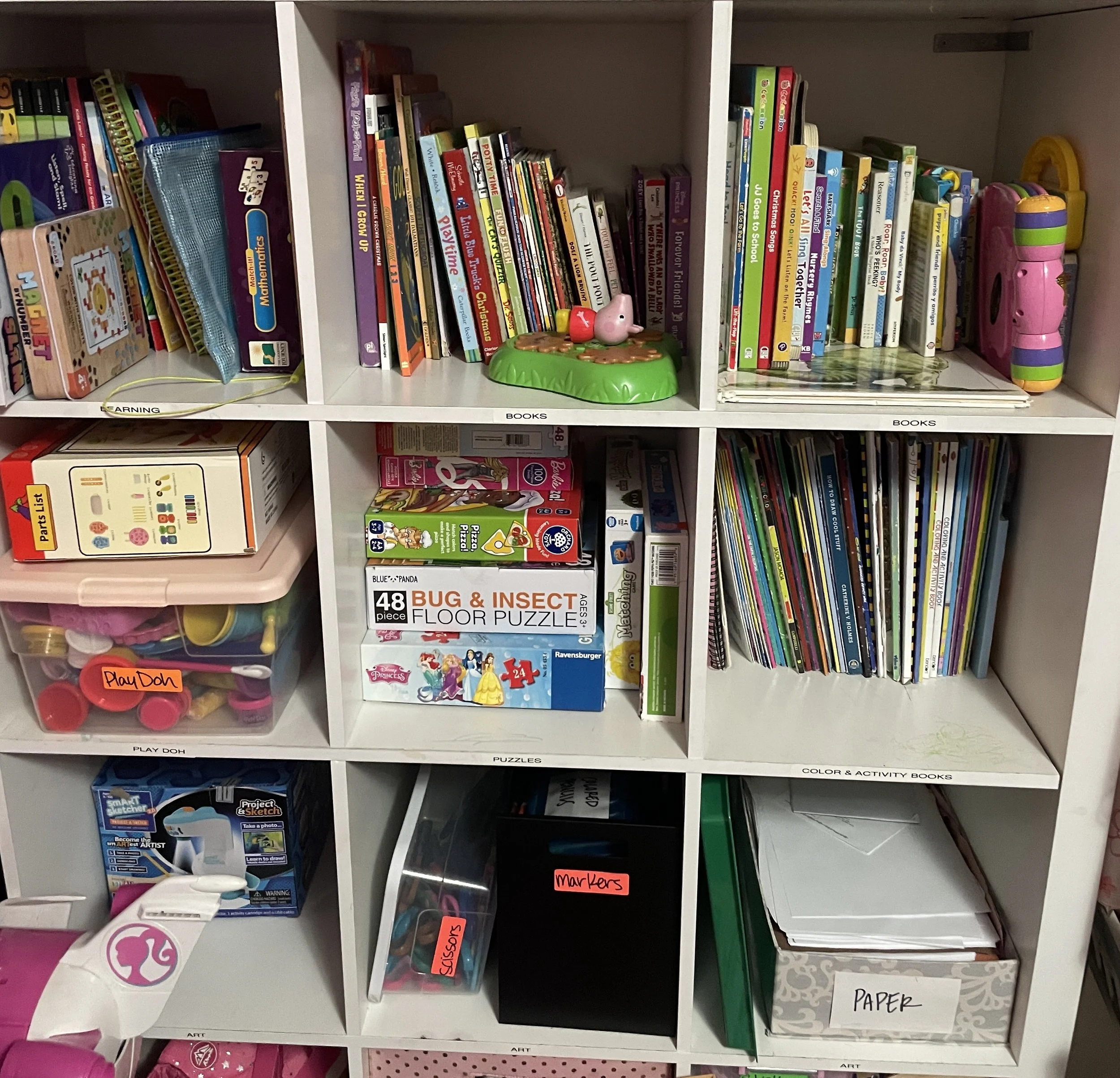
Real-life example:
A San Fernando Valley mom I worked with had her kids’ art supplies scattered throughout the house. We brought everything together into the kids’ closet, using labeled containers and shelves to create a clear system. Now the kids can easily find what they need — and more importantly, put everything back on their own. Less work for everyone involved.
Rule 3: Any Container Works
Why this matters: Organization doesn't have to look perfect to function perfectly.
Here's where I differ from a lot of organizing content you see online: You don't need matching bins from the Container Store to be organized.
Sometimes you choose function and ease of use over fashion by using something you already own. And that's not only okay—it's smart!
How to apply this rule:
Once you know where you want to store your items, look around your house first before buying anything, you might already have:
Old Tupperware containers that lost their lids
Shoe boxes
Mason jars
Napkin holders or utensil caddies
Small baskets from around the house
Drawer organizers from another room you no longer need
If you need to buy something: Check thrift stores first! Goodwill and local thrift shops are full of baskets, bins, drawer dividers, and storage solutions—often including those "viral Amazon products" people bought and donated three months later.
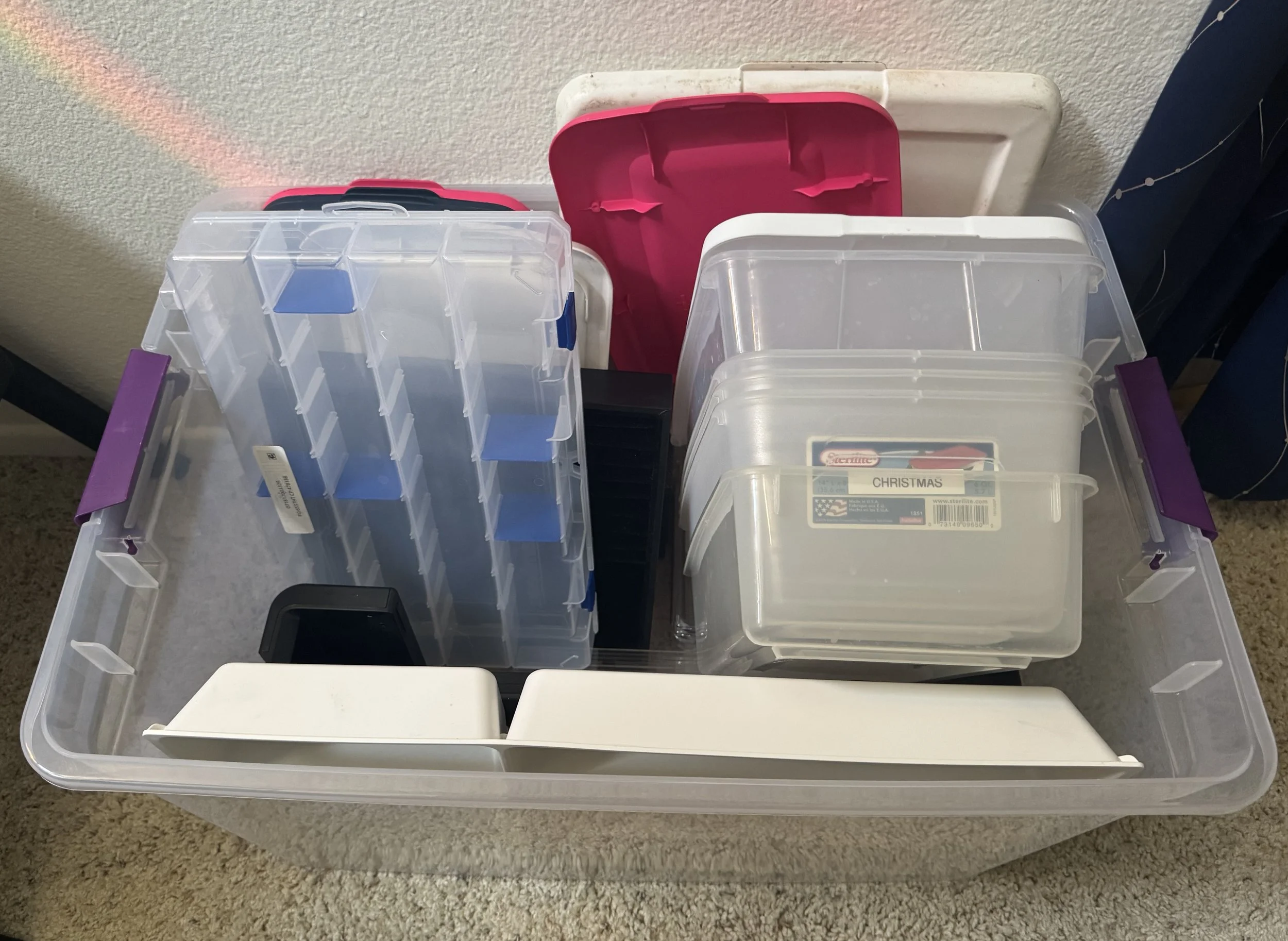
Helpful Tip from My Own Home:
I keep a tote in my office full of baskets, organizers, bins, and other storage solutions I'm not currently using. As my needs change (seasons shift, spaces need reorganizing, starting a new hobby), I just rotate items from my "storage stash." This means I almost always have an empty container on hand when I need one—no shopping required!
Real-life example: One client thought she needed to buy new bins before her organization session—but never got around to it. Once we started sorting and condensing what she already had in her closet, we uncovered a surprising variety of usable containers: laundry baskets, woven baskets, buckets, and bins of all sizes. In fact, she had so many that we created a dedicated “storage solutions” container, which she now keeps in her garage for future projects.
Why These Rules Work for Busy Families (and Why Perfection Isn’t the Goal)
These three rules might seem simple, but they’re powerful because they work with your real life instead of against it. Group Like Items helps you see what you actually own and make decisions about what to keep. Appropriate Location creates systems based on your family’s real habits and routines. Any Container removes the barrier of needing to buy expensive supplies before you can get organized.
Together, these rules reduce decision fatigue—that mental exhaustion from making too many small choices every day. When your keys always go in the same bowl by the door, your kids’ shoes have a designated bin, and your spices are grouped in one cabinet, you eliminate dozens of tiny decisions daily. More organization means less mental clutter—and more calm in your life.
And that’s the real goal. This isn’t about creating magazine-worthy spaces or achieving perfection. You don’t need to be a minimalist, buy expensive bins, or spend an entire weekend reorganizing. You just need simple systems that work for how your family actually lives.
Good starter projects for busy families:
The junk drawer
Under the kitchen sink
Art supplies
Bathroom counter
Entryway/mudroom zone
Remember the three simple rules:
Group like items
Appropriate location
Any container
That’s it. Start there, and you might be surprised how much calmer your home—and your mind—can feel.
— Good Vibes & Good Luck, Lindsey 💜
Ready for Hands-On Help?
If you're in the Santa Clarita or San Fernando Valleys and you're ready to transform your cluttered, overwhelming spaces into calm, functional systems that actually work for your family, I'd love to help!
Whether you need help with a single problem area or a whole-home reset, I work alongside you to create organization systems that fit your real life—not some perfect Pinterest ideal.
Schedule a free consultation or call/text 661-228-2456 to get started!
About violet VENTURES: Lindsey Hanna brings personalized home organization to Santa Clarita and San Fernando Valley families. She believes organization doesn't have to be expensive, perfect, or stressful—it just needs to work for how you actually live. Learn more at violetventures.org.
Some of My Favorite Organizing Inspiration
The Home Edit - Great for visual inspiration, even if you don't need rainbow-organized pantries
Marie Kondo - The "does it spark joy?" question is genuinely helpful for decluttering
Donation Locations & Info
SCV & SFV Locations - An assortment of donation places - links to a Google Sheet
Additional Resources - E-waste, bulky items, paint, etc. Look towards your cities waste management for more information in your area.
San Fernando Rescue Mission - Accepts all types of donations, easy to schedule local pick ups, and goes back to our community.